


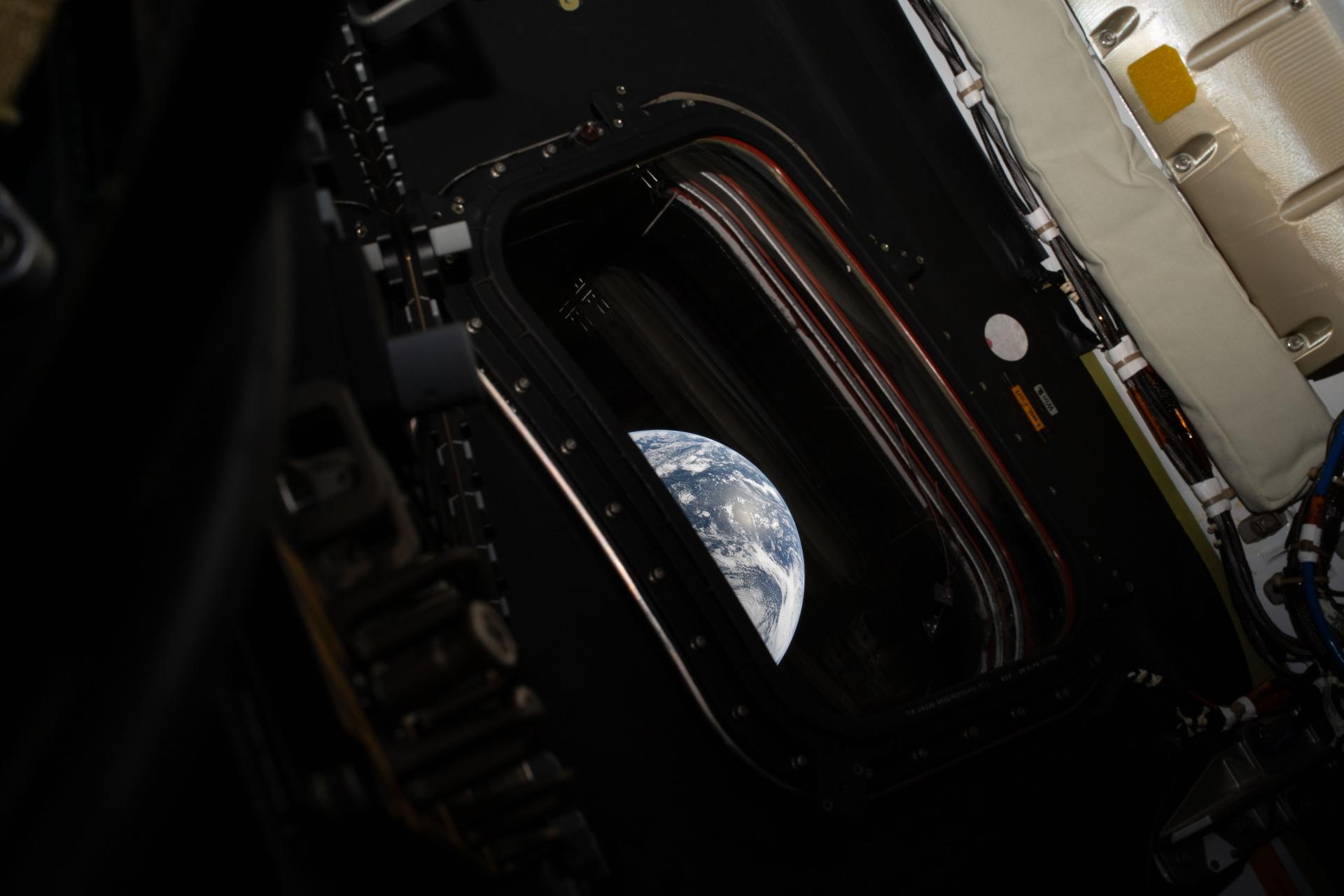
Four astronauts have now completed a historic journey around the Moon. The Artemis II mission broke the record for how far humans have traveled from Earth - and marks a new stage in the modern space race.
On Monday, the Orion spacecraft returned home after circling the far side of the moon. The trip is the first manned flight to the moon since 1972 and was carried out by three American and one Canadian astronaut, reports Associated Press (AP).
At its farthest point, the crew was 406 771 kilometers from Earth, which is about 6 600 kilometers further than the record set by Apollo 13 in 1970.
The flight followed a so-called “free-return” trajectory, where the gravity from the Earth and the Moon is used to steer the craft back without extra fuel consumption.
Observations and unique space experiences
For seven hours, the astronauts made extensive observations of the lunar surface. They photographed craters and geological formations, while reporting in real time to scientists on Earth.
The journey also included a total solar eclipse - visible only from the spacecraft. In addition, the astronauts were able to see planets such as Venus, Mars and Saturn from a perspective not normally possible from Earth.
The Canadian astronaut Jeremy Hansen described the experience to AP:
- It blows my mind what you can see with the naked eye from the moon right now. It is absolutely incredible.
Communication, emotions and symbolism
During the passage behind the Moon, contact with Earth was lost for about 40 minutes, which is a planned part of the mission. During this period, the crew reached both its closest distance to the Moon and its maximum distance from Earth.
After resuming contact, the crew reported strong impressions. The captain Reid Wiseman said:
- Such a majestic view out here.
The mission also included symbolic elements, such as carrying an Apollo 8 patch, a reminder of previous generations' space flights.
Next steps in the space program
Artemis II is a test mission for future manned landings on the Moon. The next step is to practice docking techniques in orbit, followed by a planned landing near the Moon's South Pole later this decade.
In particular, researchers highlight the possibility of identifying resources such as water ice, which could have implications for future long-duration space expeditions.
The context - a new phase in the space race
The mission comes at a time when several actors, both national and international, are investing in space. At the same time, technological advances mean that more countries and organizations can participate in developments.
Artemis II shows how human spaceflight has once again become a central issue, with control over technology, resources and future space settlements becoming increasingly important.


Like the previous manned space missions to the moon, this one is a hoax that Trump needed to draw attention away from the Iran war.
You might think it's April 1st all year round the way they fooled us, quite sick actually.
Absolute hoax again. When the media isn't beating the drum, I think something is up.
Now to the facts. The astronauts claim to have experienced a total eclipse of the sun when they circled the moon. Despite a total eclipse, there is light on the far side of the Moon and craters can be clearly photographed. A total solar eclipse seen from the Moon means that you are in the Earth's shadow and the far side of the Moon is also in darkness. In the picture, you can see sunlight from the left and not near the Earth. How stupid does NASA think people are? The dumber if you fall for this scam.