


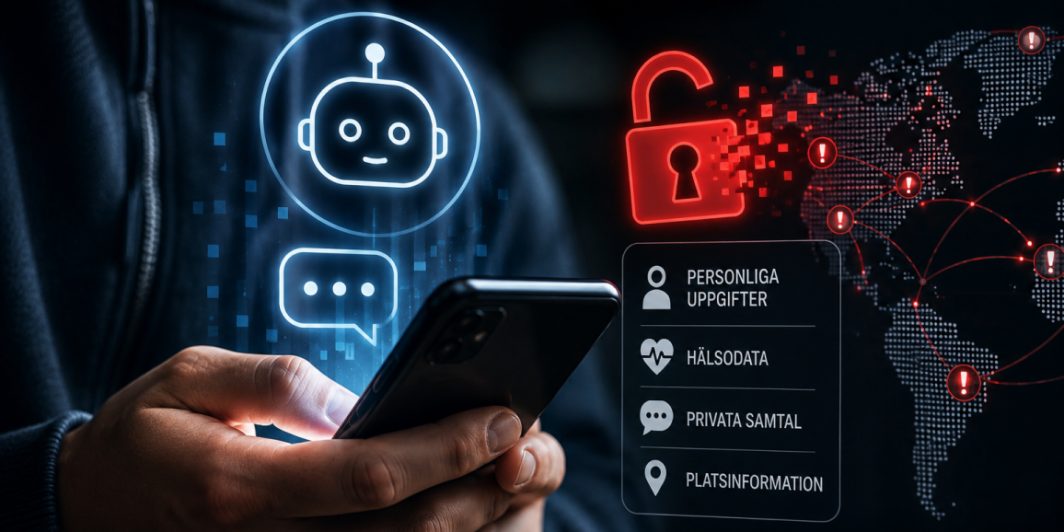
More and more young people are using AI as a sounding board for mental health and personal problems. Now, Swedish and European authorities are warning that many do not understand what might happen to the sensitive information they share.
Artificial intelligence (AI) has become an integral part of everyday life for many young people. One survey According to data cited by the Swedish Data Protection Authority (IMY), 87 percent of young people use AI services, and 54 percent have discussed personal or intimate matters with AI.
At the same time, 63 percent say they don't know what happens to the information they enter.
A European study Findings from the French data protection authority CNIL and Groupe VYV point in the same direction. Nearly half of young people use AI for personal matters, while 85 percent want to know more about how their data is handled.
Private chats became public
The risks are not merely theoretical. Daily News reports that private AI conversations have become publicly searchable after users, often without understanding the consequences, used a sharing feature in the AI service. Shared conversations could then be found via search engines and become accessible to anyone on the internet.
As a result, personal information, health issues, and other sensitive conversations have, in some cases, become public.
IMY: Avoid sharing sensitive information
IMY recommends that users refrain from entering sensitive personal data into AI services and that they familiarize themselves with how the data is stored and used. The authorities are also calling for greater transparency from AI companies so that users can make informed decisions and better protect their privacy.


