


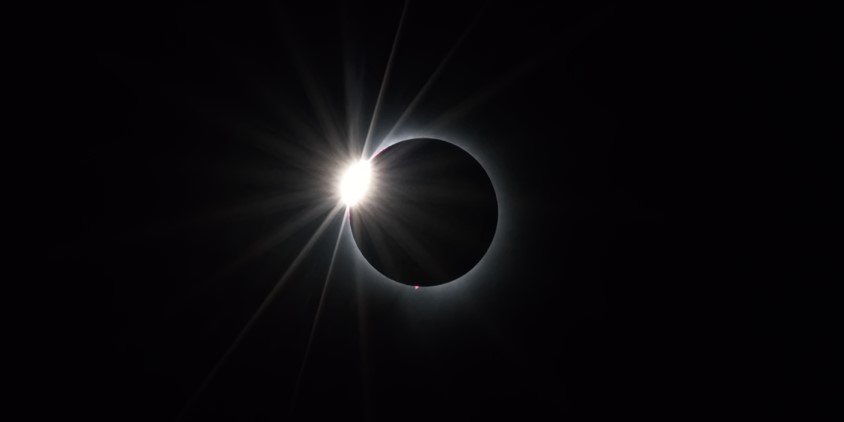
A dramatic solar eclipse is sweeping across Europe tonight. As the moon passes between the Earth and the sun, it blocks the sun's light and creates a solar eclipse. Depending on where you are, the sun may be completely or only partially obscured for a few minutes. In Sweden, about 85 percent of the sun’s rays are blocked—and at the same time, nearly 10 gigawatts of solar power is expected to be lost from Europe’s power grid in the near future.
The solar eclipse will begin shortly after 7 p.m. and will be one of the most dramatic seen from Sweden in recent years. In northern Spain and Iceland, it will be total, while Swedes will see the sun turn into a narrow sliver.
– It's a truly spectacular event, says the astronomer Peter Linde to Aftonbladet.
Solar power disappears when the sun is obscured
The solar eclipse doesn't just affect what can be seen in the sky. It also affects Europe's electricity production. Solar panels need sunlight to generate electricity, so when the moon blocks the sun, production drops rapidly, reports Industry Today (DI).
At its peak, Europe’s solar power output is expected to drop by about 9.7 gigawatts (GW). A gigawatt is a measure of how much electricity is produced at a given moment. 9.7 GW is a large amount—roughly equivalent to the combined output of several large nuclear reactors. The biggest change will be in Spain, where about 5 GW of solar power could be temporarily lost when the solar eclipse is at its peak.
That doesn’t mean the electricity will suddenly run out. For the power system to function, generation must constantly match consumption. When solar power output decreases, grid operators therefore need to quickly source electricity from other sources. This can be done through other power plants, imports from other countries, batteries, or special reserves.
The risk is lower because the solar eclipse occurs in the evening. At that time, the solar panels are already producing less electricity than they do at midday. If the solar eclipse had occurred a few hours earlier, significantly more solar power would have been lost all at once.
That's when the solar eclipse is at its peak
In Sweden, the solar eclipse will reach its peak at 7:42 p.m. in Kiruna, 7:56 p.m. in Stockholm, 8:00 p.m. in Gothenburg, and 8:04 p.m. in Malmö.
– We had a solar eclipse in Sweden as recently as last year, but it covered only 30 percent of the sun. Now it’s covering a much larger portion, which is quite unusual, ", says Linde.
A Warning Ahead of Tonight's Performance
Anyone who wants to watch the solar eclipse should find a spot with an unobstructed view to the west and northwest. But it’s important to protect your eyes: you’ll need proper solar eclipse glasses, since looking directly at the sun can cause eye damage.


THE DARK SIDE IS COMING.
CHEERS! Friends of freedom. :-)
Cheers