


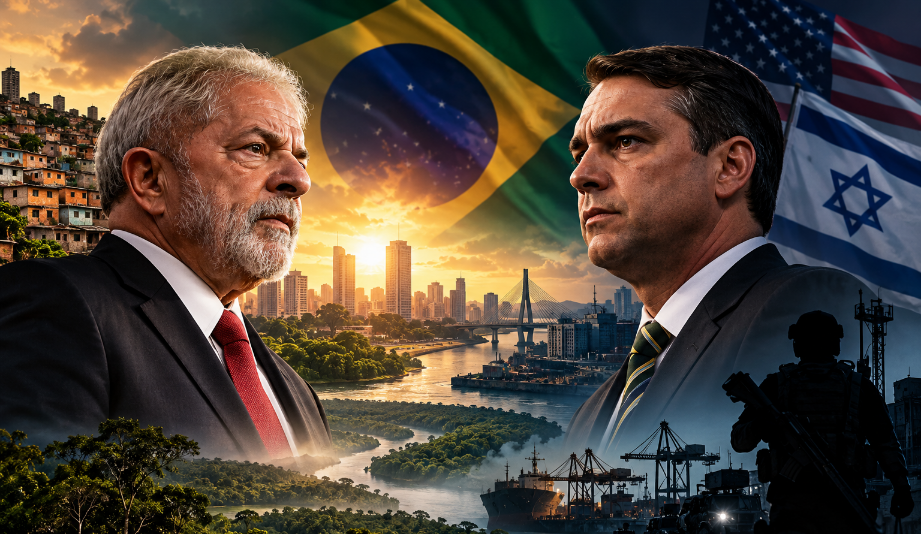
Brazil is heading into a presidential election marked by a fierce showdown between left-wing President Luiz Inácio Lula da Silva and right-wing challenger Flávio Bolsonaro. Underlying the race is a broader conflict over the economy, security, the power of the judiciary, and foreign influence—where Bolsonaro’s close ties to the U.S. and Israel have become a clear dividing line.
Nearly 160 million Brazilians are registered to vote in the election on October 4. If no candidate receives more than 50 percent of the valid votes, a runoff election will be held on October 25. At the same time, the entire Chamber of Deputies and two-thirds of the Senate will be elected.
Bolsonaro Promises a Tougher Stance
Flávio Bolsonaro, 45, is trying to revive the political movement that his father Jair Bolsonaro represented. He pursues a more market-oriented economic policy and wants to reduce government spending and carry out privatizations.
Security is a key issue. Among other things, Bolsonaro wants to build maximum-security prisons and treat major criminal organizations as terrorist groups. The AP also reports on proposals to lower the age at which young people can be tried as adults for serious crimes.
Jair Bolsonaro is currently serving a prison sentence of more than 27 years after being convicted of plotting a coup following his election loss in 2022. Flávio has promised to try to secure his father’s release.
The Power of the Courts in the Spotlight
The role of the judiciary has become a major campaign issue. Bolsonaro claims that parts of these institutions have become too closely aligned with his political opponents.
journalists Glenn Greenwald claims At the same time, a judge allied with Lula prevented the Globo television network from showing Lula’s empty podium after the president failed to appear at a televised debate. The details regarding why Bolsonaro later left the debate himself are disputed.
Lula is betting on the government
Lula, 80, is seeking a fourth term in office, promising social programs and greater government influence over the economy. At the same time, public debt exceeds 82 percent of GDP, and the cost of living and household debt have been major issues in the election campaign.
In foreign policy, Lula has made national sovereignty a central theme and warned against U.S. interference. The U.S. rejects accusations that it is trying to influence the election.
Israel Endorses Bolsonaro
Flávio, on the other hand, wants to bring Brazil closer to both the U.S. and Israel. Israel’s Minister for Diaspora Affairs Amichai Chikli has publicly supported Bolsonaro and reported on several pledges made by the candidate.
According to Chikli, Bolsonaro has promised to move Brazil’s embassy to Jerusalem, have the country join the Isaac Accords, and strengthen the fight against anti-Semitism. Chikli wrote:
”Flávio is the candidate who will carry that movement forward in Brazil.”
This means that a member of the Israeli government has openly taken a stance in the Brazilian presidential election, even as Bolsonaro has promised a clear change in policy toward Israel.
Brazil is thus choosing between two distinct paths: Lula’s state-oriented economy and a more independent stance toward Washington—or Bolsonaro’s market-liberal and tougher security policy, combined with significantly closer ties to the U.S. and Israel.


It feels extremely strange to support a left-wing candidate, but that's what I'm doing here